Case Study Project
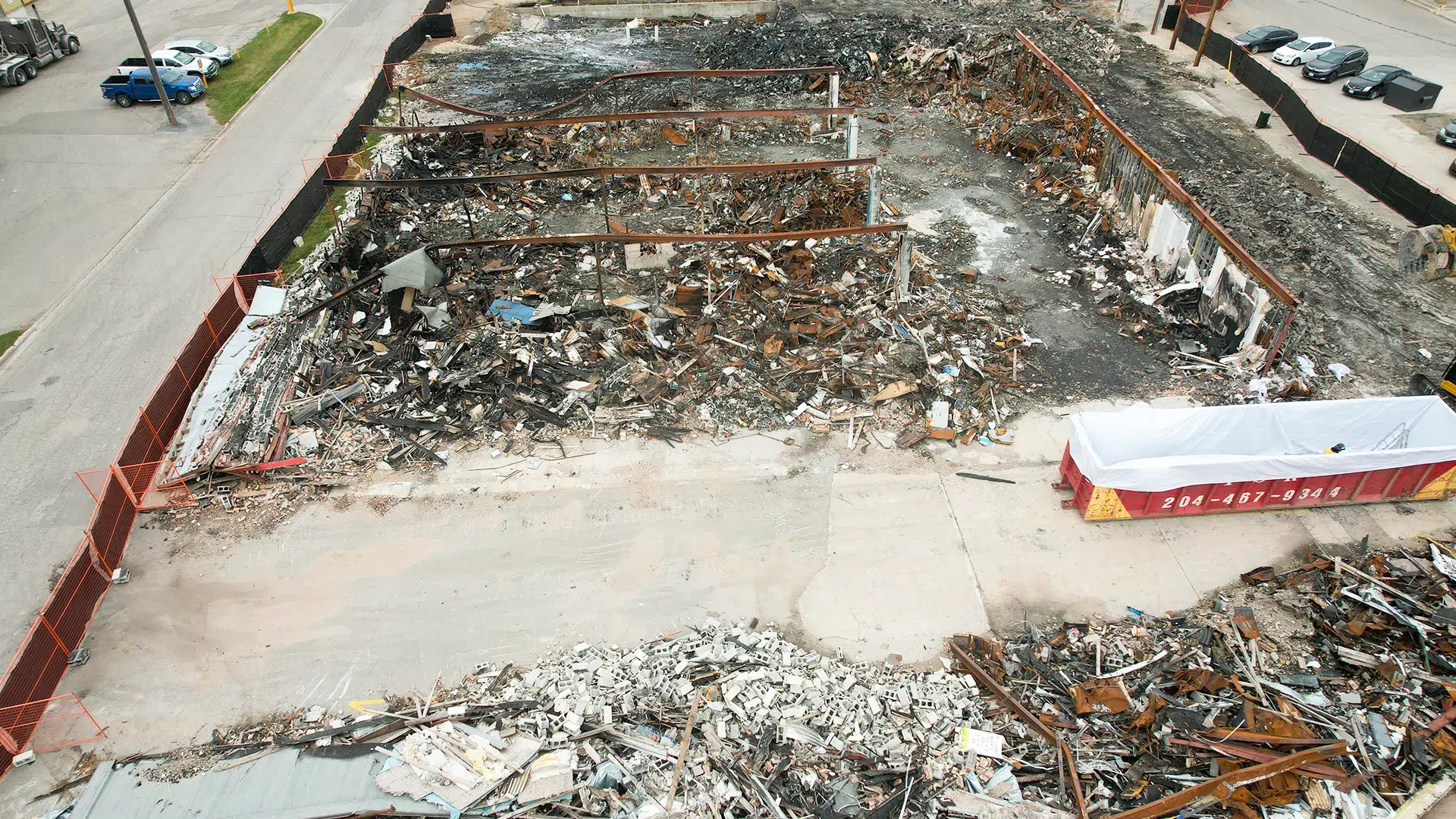
A major fire broke out in a Steinbach strip mall located within a busy business park—adjacent to both residential housing and a children’s playground. This incident not only disrupted local businesses but also posed significant risks to public health and the surrounding environment.
Among the most pressing concerns were the presence of asbestos-contaminated materials and hazardous runoff from fire-suppression efforts.
Miller Environmental was called in soon after the flames were extinguished to provide an immediate and comprehensive emergency response. The team constructed protective berms, installed fencing, and pumped out thousands of liters of contaminated water to prevent environmental damage. However, as the severity of asbestos contamination became clear, a provincial stop-work order was issued. Miller was then tasked with demonstrating their capacity to remediate the site thoroughly, address the asbestos hazard, and comply with strict governmental regulations.
Immediate Hazard Control: Rapidly construct barriers and pump out large volumes of runoff to prevent hazardous materials from reaching residential areas and play spaces.
Regulatory Compliance: Provide a detailed abatement plan to the province—assuring minimal environmental impact, thorough removal and disposal of asbestos, and strict worker-safety protocols.
Specialized Asbestos Remediation: Safely remove and dispose of asbestos-laden debris in accordance with provincial hygienist requirements, which included air monitoring, staff training documentation, and rigorous oversight.
Complex Debris Management: Beyond asbestos, the site included fire-damaged paint materials, metal, and general rubble. The team needed to segregate and handle each waste stream appropriately, recycling steel where possible.
Berm & Fencing: Swiftly installed physical barriers to limit spread of contaminants.
Wastewater Extraction: Removed thousands of liters of water used to fight the fire, preventing runoff into nearby residential and playground areas.
Detailed Plan for Asbestos Abatement: Satisfied the provincial hygienist by outlining precise containment, removal procedures, staff training, and planned air-quality checks.
Stop-Work Order Resolution: Demonstrated compliance with provincial legislation, earning approval to proceed with the full-scale cleanup.
Careful Asbestos Handling: Workers donned specialized PPE to bag, seal, and transport asbestos materials in lined 80-yard bins.
Excavation to Grade Level: Removed all fire-damaged debris—including remnants of a paint facility—down to the foundation level.
Air Monitoring & Testing: Conducted regular checks to ensure asbestos fibers did not become airborne and to safeguard worker and community health.
Hazardous Waste Disposal: Asbestos and paint-impacted materials were disposed of at approved facilities.
Metal Recycling: Salvageable steel was removed and recycled in compliance with environmental guidelines.
| Benefit | Outcome |
|---|---|
| Immediate Emergency Response | Rapid containment prevented contaminants from affecting nearby residential areas and children’s park. |
| Regulatory Compliance | Detailed abatement plan and stringent safety checks satisfied all provincial requirements. |
| Safe & Thorough Asbestos Removal | Certified procedures protected workers and ensured zero harmful fiber releases. |
| Comprehensive Site Restoration | Salvaged steel was recycled, reducing landfill waste and environmental impact. |
| Timely Completion | Final air testing and provincial sign-off were secured in less than 20 weeks. |