Case Study Project
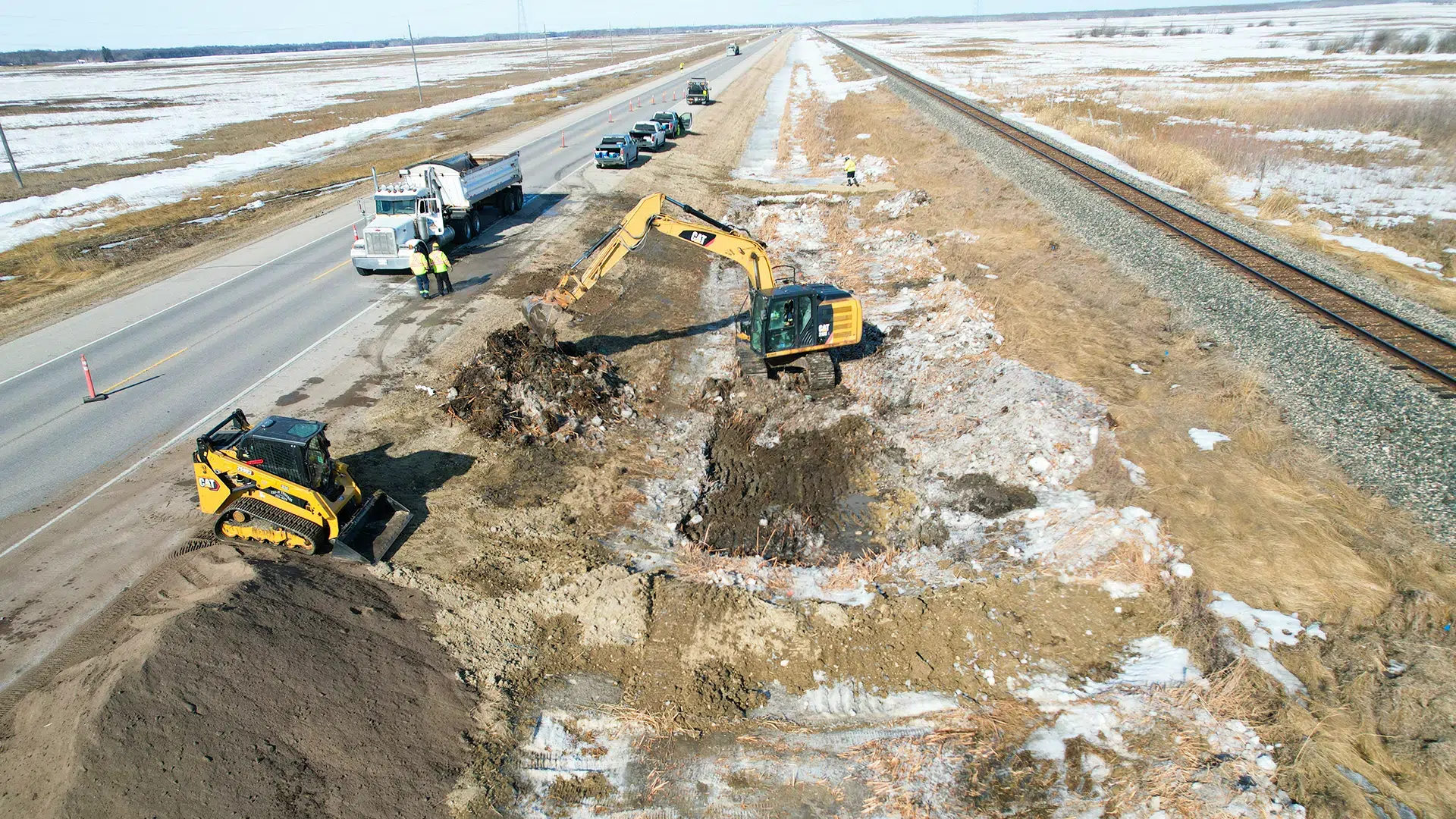
On November 15, 2024, a highway tractor traveling on Highway 16 suffered a severe saddle tank rupture, spilling over 500 liters of diesel fuel into a roadside ditch. The risk of diesel leaching into nearby soil and water sources was high, prompting Manitoba Public Insurance (MPI) to dispatch an immediate cleanup effort. While a tow truck company initially created a makeshift sand berm to contain the spill, it was soon clear that specialized intervention was needed to fully mitigate environmental damage.
Miller Environmental was brought on board to handle the emergency containment and coordinate a comprehensive remediation plan. The impacted area measured approximately 45 meters in length and 9 meters in width, requiring both prompt action and careful adherence to provincial guidelines.
Multiple Stakeholders: The site lay near a CPKC railway line, a buried fiber cable (Bell MTS), and an active highway, making excavation risky. Miller Environmental had to coordinate with provincial authorities, MPI, the railway, and utility companies to keep the project compliant and safe.
Sensitive Excavation Conditions: Traditional excavation methods could disrupt buried infrastructure. A proven soft-dig approach using hydro vac trucks was essential for removing contaminated soil without damaging utility lines.
Regulatory Approval: Miller was required to submit a comprehensive Remedial Action Plan (RAP) to the province, demonstrating their qualifications and detailing the steps to bring soil conditions back into compliance with Canadian Council of Ministers of the Environment (CCME) guidelines.
Traffic & Site Management: The cleanup necessitated temporary lane closures on Highway 16, requiring specialized traffic control to ensure both crew and public safety.
Pumping & Disposal: After the initial sand berm contained the spill, Miller removed 28,000 liters of diesel-contaminated water and set up a more robust barrier system to prevent further spread.
Remedial Action Plan: Developed a detailed strategy meeting CCME standards for petroleum hydrocarbon impact. The plan included steps for soil sampling, excavation, and confirmatory lab testing.
Stakeholder Engagement: Worked closely with provincial regulators, MPI, CPKC Railway, and Bell MTS to secure timely approvals and ensure no disruption to critical infrastructure.
Hydro Vac Technology: Employed soft excavation via hydro vac trucks to carefully remove impacted soil while avoiding underground utilities.
PID Meters & Lab Analysis: Used real-time hydrocarbon sniffers (PID meters) and later confirmed sample safety through lab testing to ensure all soils met provincial guidelines.
Backfill & Regrading: Once confirmatory samples showed the site was within acceptable limits, crews refilled the excavated areas and restored them to meet original grade.
Final Documentation: Detailed reports and test results were submitted to the province, leading to an official sign-off and closure of the spill incident in just 60 days.
| Benefit | Outcome |
|---|---|
| Rapid Emergency Response | Containment measures and large-volume pumping prevented further contamination of ditch water and soil. |
| Regulatory compliance | A government-approved Remedial Action Plan satisfied CCME standards for petroleum hydrocarbons. |
| Safe & Sensitive Excavation | Hydro vac trucks avoided damage to buried utility lines and fiber optic cables near the railway. |
| Stakeholder Coordination | Successful collaboration with MPI, provincial authorities, CPKC Railway, and Bell MTS. |
| Clear Communication & Reporting | Comprehensive documentation and testing ensured swift provincial sign-off within 60 days. |
| Minimal Public Disruption | Temporary traffic lanes were effectively managed to reduce impact on motorists. |