Case Study Project
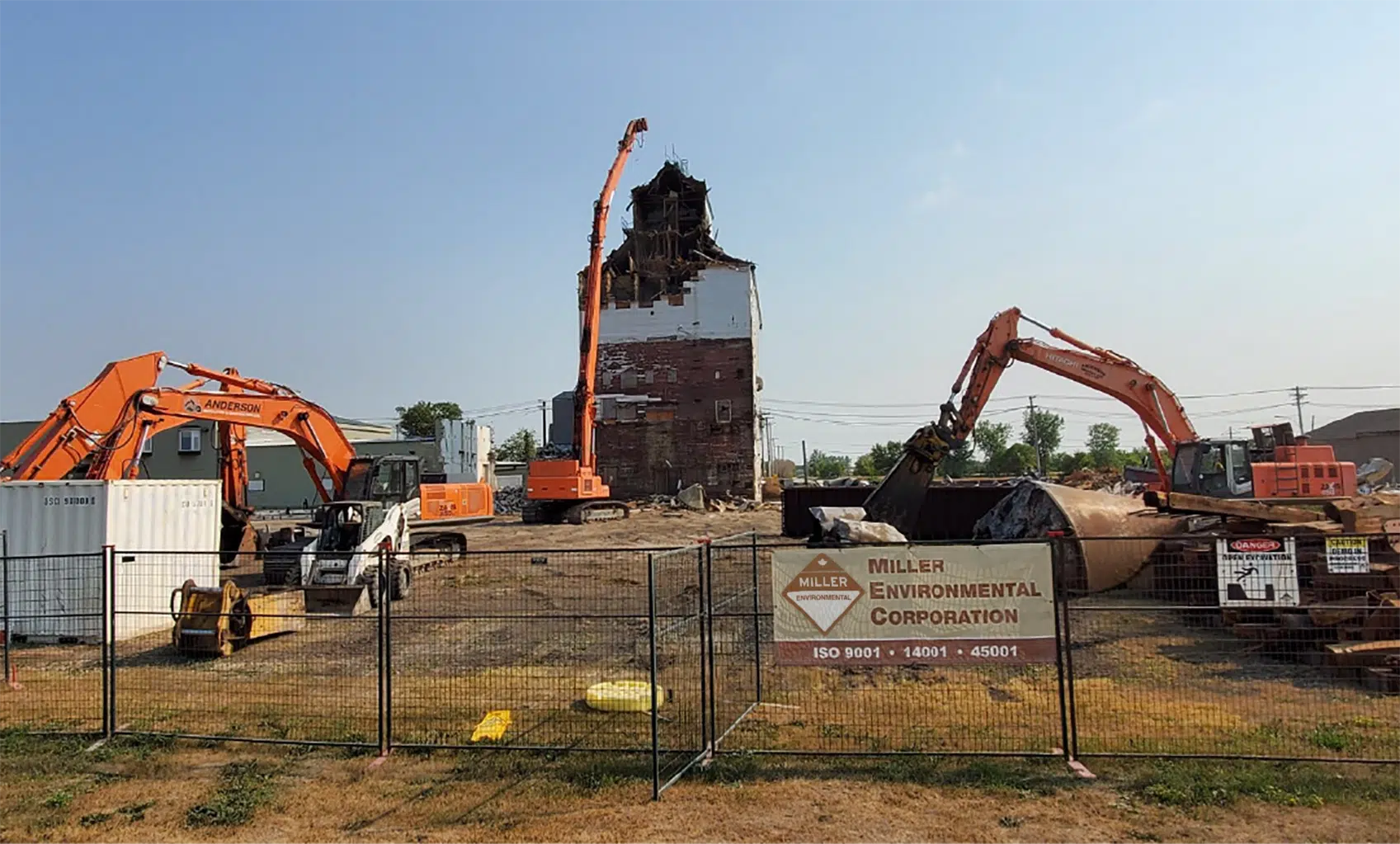
A decommissioned grain elevator in the city of Winnipeg was listed on the provincial contaminated sites registry due to elevated arsenic levels in the surrounding soil. Over time, the structure deteriorated, and the unsecured site became a magnet for trespassers. With the goal of redeveloping the land, the site had to first be safely prepared for sale, which included extensive remediation and demolition work.
Environmental assessments confirmed widespread arsenic contamination, both horizontally and vertically throughout the soil. Investigations also revealed a waterfilled basement under the main structure, containing deteriorated concrete beams, and undocumented substructures. The presence of water infiltration and structural voids further complicated the situation.
Faced with overlapping risks, the property owner needed a solution that would ensure both environmental compliance and structural stability. The plan also had to satisfy regulatory requirements and support the long-term goal of redeveloping the site.
The property owner considered several remediation strategies. Some contractors proposed in situ treatment to stabilize the arsenic in place without excavation. While this option appeared efficient on paper, it came with considerable risk. In situ methods remain largely unproven for arsenic in urban settings, often involve months of testing, and carry no guarantee of success or regulatory acceptance.
Miller Environmental offered a safer and more complete solution. With decades of experience in hazardous site remediation, the team had a proven track record managing both demolition and heavy metal soil contamination. Miller also operates a licensed hazardous waste treatment facility in Manitoba, allowing them to excavate, transport, and process all contaminated materials directly. Regulatory documentation and compliance reporting were managed entirely in-house, ensuring full oversight and a clear chain of custody from start to finish.
By choosing Miller, the property owner avoided fragmented oversight and eliminated the uncertainty of relying on experimental methods or external contractors. The project would be delivered by a single accountable team from start to finish.
Miller worked with the property owner and an environmental consultant to conduct detailed site assessments and prepare a comprehensive Remedial Action Plan. The plan was submitted to the province for approval and outlined a clear path forward for both demolition and contaminated soil remediation.
Working alongside a demolition company, Miller coordinated the phased dismantling of the elevator structure. Crews developed a site-specific plan to manage confined space hazards, ensure structural stability during teardown, and prevent the spread of dust and debris. Utilities were disconnected in partnership with Manitoba Hydro, city water services, and the Winnipeg Fire Department.
During demolition, the team encountered a large basement area filled with water and concealed subgrade structures. Miller adapted its plan to include safe dewatering, removal of concrete debris, and careful excavation to avoid damage to adjacent infrastructure. All materials were assessed and handled under provincial guidelines.
Following demolition, Miller oversaw the excavation of arsenic-impacted soil from around and beneath the former structure. Contaminated soils were transported to Miller’s own licensed facility for processing and final disposal.
Throughout the project, the environmental consultant provided third-party oversight, including validation sampling, and regular field inspections. Upon completion, all findings were submitted to the province to support regulatory closure and formal delisting of the site.
Miller Environmental transformed a structurally compromised and chemically contaminated property into a safe, clear, and compliant development site. By managing both demolition and remediation with in-house expertise and equipment, Miller helped the property owner avoid delays, reduce risk, and achieve a clean bill of health for future use.
| Benefit | Outcome |
|---|---|
| Clearance for redevelopment | The site was remediated to provincial standards and cleared for future sale |
| Regulatory compliance | The RAP and post-remediation sampling satisfied all provincial requirements |
| Hazard removal | Basement hazards, contaminated soil, and undocumented debris were removed |
| Community and site safety | Site was secured and work completed without incident or public disruption |